STS Strategy · Sharper moves.

Decide. Then execute.

Commercial strategy for founders, C-level and private equity. I take the commercial seat, make the call, and then execute the decision myself.

Your team is working hard and growth costs effort. Sales, marketing and business development pull in three directions. The pipeline is reactive. And the decision that would fix it has been sliding for months.

  • Within three weeks you know where your revenue disappears, and why
  • One commercial plan for sales, marketing and business development
  • A board and investor story that still adds up after three follow-up questions
  • Recurring work that runs itself, without a large adoption programme
  • +32% revenue, +47% EBITDAThe Onemeeting Company, after the commercial rebuild
  • +91% YoYnew franchise model, rolled out across 20+ locations
  • USD 2M+ pipelineMaloba, in four months from zero
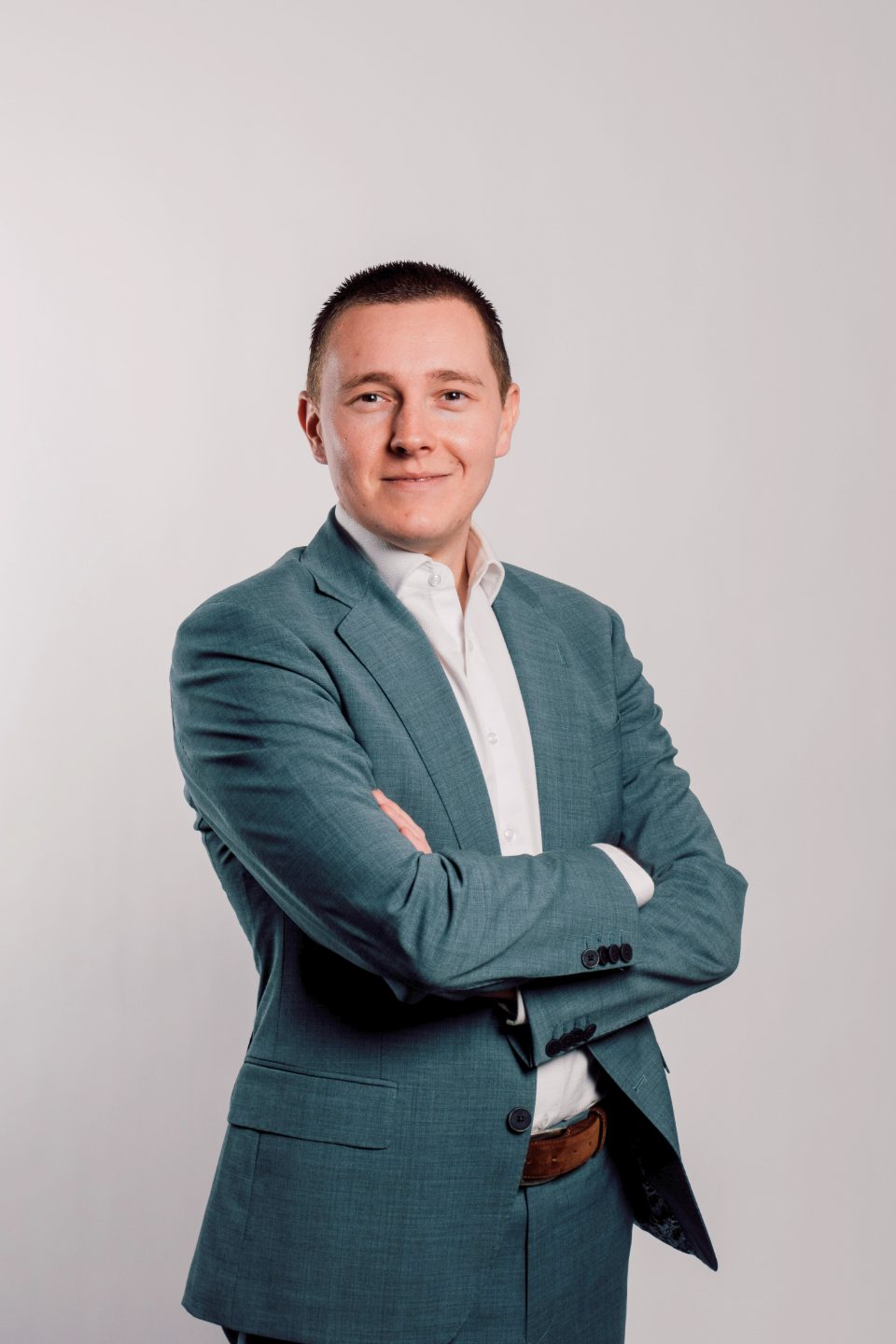
Kevin van Grondelle, commercial strategist and founder of STS Strategy
The Onemeeting Company Maloba Private Game Reserve Sales Management Association D&B The Facility Group Atrium Meeting Centre Compass Group

Organisations I contributed to commercially, on payroll or under contract.

What lands on my desk

Three questions I get almost every month.

Different sector, different size, the same pattern. Someone knows something has to happen and is looking for a person who works it out and then does it.

“Why are we not growing faster?”

Somebody always owns the commercial process. The question is whether that ownership actually shows. Is the role actually taken, does that work, is help needed, and is the market ready for it. That is what I weigh. I read your processes, reach a view quickly, and say what has to happen to move it the right way.

Fractional & interim →

“Surely this cannot be that hard?”

An inbox that sorts itself. A draft reply waiting before you log in. Quotes that stop starting from an old file. A connector that ties your own systems together. Small work that looks simple, right up until you have to design and set it up yourself for the first time. Designing and setting it up is my part.

AI & automation →

“Do I deliver my clients what I promise?”

You sell an experience that is delivered thousands of kilometres away. On an expedition ship, in a lodge, far from your office. Nobody from your side is watching. The reviews are just good enough to reassure you and far too blunt to warn you. We travel as paying guests, tell you what actually happens, and then help you close the gap.

Remote Hospitality →

Where revenue disappears in a commercial process

Where people look “we need more leads” Where the analysis lands qualification, proposal and pricing Intake Qualification Proposal Pricing Closed Dashed: what the process should return Filled: what actually comes through
Schematic, not a measurement. The question is never whether there is a gap, but which stage it sits in. In one company it is qualification, in the next it is pricing. That difference decides the intervention, and it is the first week of work.
Who you get at the table

I have operated at C-level myself.

Board seats at two companies, in two worlds that look unrelated. Business plans written and modelled, budgets built, investment cases made and the funding round prepared. Payback periods, ROI and the numbers underneath a plan were my job, not somebody else's. If you hire me, you hire someone who has had to answer the questions you have now, back when there was no advisor to pass them to.

C-level Director of Onemeeting.com and, as CCO, a member of the Executive Committee of the parent company, 2022 to 2025. Then commercial director at Maloba Private Game Reserve.
+32% / +47% Revenue and EBITDA under my commercial responsibility, after the rebuild from 2021.
USD 2M+ Pipeline for Maloba Private Game Reserve, inside four months, from zero commercial infrastructure.
Solo No analysts, no juniors, no overhead. Twenty to thirty hours of client work a week, deliberately small.

Almost every commercial problem put in front of me has a surface current and an undercurrent. The surface is what you see: pricing, portfolio, the numbers you show your board. The undercurrent is what you do not see: which deal is stuck and why, who quietly disagrees with the direction, and what gets said in the corridor. Most people read one of the two. That is where it jams, because the answer always sits in the connection between them.

I work with one foot in the strategy and one foot in the mud. Board table in the morning about pricing and portfolio, sales team in the afternoon going through the pipeline. I have done that for seven years, and it is exactly what makes me useful on a question that starts above and has to land below. Practice translated into theory, and theory back into practice.

Where that comes from: an entrepreneur from an early age, hotel school in Breda where theory had to be applied on the floor the same day, and then six years inside a fast-growing company. In the boardroom I was the counterweight to the CEO and guardian of shareholder interest, and the voice that plays devil's advocate when consensus arrives too easily. BBA International Hotel Management, cum laude. Working languages Dutch and English.

STS Strategy started in November 2025, because there is a gap between what a large consultancy delivers and what a founder or CCO needs. A deck is not yet a decision. Four juniors do not add up to one senior.

Where I sit relative to the alternatives

Strategic level Low Little execution Executes it Strategy consultancy Thinks along, delivers a deck Agency Executes what you ask for Interim manager Runs the existing strategy on STS Strategy Sets the strategy and executes it
This layout is my own reading of the field, not market research. The point is the top-right corner. A consultancy thinks along and then leaves. An interim manager runs the existing strategy on. I set the strategy and then execute it myself.

What I do not do: volume sales coaching, agency execution, content or lead generation as a service, financial modelling, due diligence, M&A advisory, full-time executive roles outside an interim context, and physically location-dependent work. That boundary is positioning, not tone.

How it starts

Three steps to a decision.

Nothing to prepare and nothing to commit to. The first call costs you thirty minutes and leaves you with a sharper diagnosis than the one you have now.

You put the question on the table

You describe where you stand. I keep asking until it is clear whether the problem sits in intake, in conversion, in pricing, or in who is allowed to decide.

30 minutes

You get one proposal with scope and a price

A three-week sprint, a fractional cadence over months, an interim seat or board preparation. One recommendation with a number under it, so you can say yes or no straight away.

Within two working days

I design the plan and I run it

You know where your revenue disappears, who decides what, and what you will and will not do for the next two quarters. Then I go and do it. You are not buying an advisory report to execute yourself. You get both halves.

From week three

From first call to execution

Day 0 Day 2 Week 3 After that Call 30 minutes Proposal scope and price Decision direction set Execution by me
The thick line on the right is the part most advisors hand back to you. With me it carries on.
What I do

Three services and one venture of my own.

Fractional & interim commercial leadership

For founders, CEOs, boards and private equity in B2B scale-ups and mid-market. The commercial seat is empty, half filled or overstretched. I take it, one to five days a week, with full responsibility inside the agreed scope and an end date.

  • Strategy Sprint · 3 to 4 weeks, fixed fee
  • Fractional cadence · 1 to 2 days a week, 6 to 18 months
  • Interim full-time · 4 to 5 days a week, 3 to 9 months
  • Board & Investor Prep · 2 to 6 weeks

Torn between fractional, interim, a sprint or an agency? Compare the four formats.

Read the practice →

AI & automation

Strategic for boards, practical for SMEs, associations and support offices. Above: which AI course fits you and what it returns. Below: building blocks with fixed scope and a fixed price, from an ordered archive to automatic draft replies and connections between your own systems.

  • AI course for the board · choices, risks, what it is worth
  • Six building blocks · fixed price per block
  • Built inside your own environment, on your own licences, so you hold the controls after handover

See the menu →

Remote Hospitality

For owners, investors and CEOs of expeditions, lodges and anywhere else you host guests far from your office. Muriël Labahn and I have more than thirty years of hospitality between us, on the commercial side and on the guest side. We travel as paying guests, read the same trip from both worlds, and then help you close whatever gap we find.

  • Outcome: where your promise and your delivery come apart, and what that costs per booking
  • Then a 90-day plan, and my hands on the execution if you want them

Read the practice →

Emigratieplan

Not a service. A product I build and run myself. As far as I have been able to find, it is the only calculator that compares more than two countries at once in a single harmonised model: tax, pension, assets, housing and cost of living across nine countries plus the Netherlands, on your own numbers.

  • Nine months of building: model, database, security, UI and UX
  • What you see here is what you hire in me: analysis, build and execution in one person

Why it is here →

The common thread

What those four have to do with each other.

At first glance I do four different things. They come from the same habit: I go looking for the hardest question in a company or a sector, and I answer it.

One habit, four applications

What is the hardest question here? and how do I answer it Fractional & interim Why are we not growing faster? AI & automation What can AI concretely do here? Remote Hospitality Do I deliver what I promise? Emigratieplan Where do I come out best?
Four different clients, the same way of working. That is why the breadth is not fragmentation.

No benchmark, no template. None of those four questions has a ready-made answer. You have to take each one apart before anything sensible can be said: which layer, which assumption, and who actually decides. How that plays out sits in the piece on halving prices in Amsterdam.

Two sides of the same trip. In premium hospitality marketing measures the promise, operations measures the experience, and nobody puts them next to each other. Muriël Labahn and I have more than thirty years in hospitality between us, her on the guest side and me on the commercial side. That lets us judge the same trip from both worlds, against one standard.

Nine months of building. No model existed that ran ten countries through exactly the same calculation on your own numbers. Put ChatGPT, Claude and Gemini side by side and you still do not get that comparison, because the work is not recall. It is harmonising, validating and calculating. Emigratieplan took me nine months: tax research, data model, database, security, UI and UX.

AI is the tooling underneath. Without AI, work like Emigratieplan would take years. A commercial question that used to need a quarter and a project group now takes weeks. On guest experience AI changes little, because that is precisely the part AI does not take over, and will not take over any time soon.


I stand with a foot in two generations. One foot millennial, one foot Gen Z, raised in a way of learning that still belonged to my parents. You typed a test on a computer instead of writing it out, and you searched Google instead of the library. The principle stayed the same: nobody tells you exactly what to do, you work it out yourself, and that is where the learning happens. Working things out is still the part of the job I enjoy most. Now with AI alongside it, and with the same habit of checking whether it holds up.

What is at stake

Waiting is a choice too. That choice costs money.

Whichever of the four it is in your case, the pattern is the same. The question has been sitting there for a while, everyone knows it, and nobody makes the call.

What six months of delay costs

  • Your forecast stays a guess and your pipeline stays reactive
  • Margin disappears through pricing nobody dares to touch. How that played out in Amsterdam
  • Recurring work eats hours you never see again
  • Guests and clients notice the gap between promise and delivery before you do
  • Every decision lands on your desk. Three causes underneath that

What you have once you choose

  • One commercial plan that sales, marketing and BD steer on
  • Pricing you can defend, including under pressure
  • Hours back from work that runs itself
  • Evidence from the field that your guests get what they paid for
  • Decisions taken where they belong, with cover when one goes wrong
Proof

What happened under my responsibility.

Three situations with the same starting point: the commercial structure was missing, or it existed and nobody was steering it. The numbers sit at the top of this page.

The Onemeeting Company

Sales, marketing and partnerships each had their own plan and their own numbers. I reworked the pricing, rebuilt the partner model and brought the commercial line under one responsibility. 2019 to 2025, the last three years as a director and ExCo member.

Read the case →

Maloba Private Game Reserve

An ultra-luxury safari lodge with no distribution, no CRM and no sales story. Positioning, pricing, channels and pipeline built, and the pre-opening led until the first bookings came in. Completed Q4 2025.

Read the case →

Sales Management Association

An association tracking members, sponsors and events in loose lists. CRM selected, implemented and introduced to the people who actually use it, event tooling set up, and the commercial infrastructure put in place. Ongoing.

Read the case →

How I work

What you notice once I sit down.

Within a few conversations I see how a company fits together. Where the money comes from, where it leaks, who really decides. Given a set of numbers I usually know within an hour where a deviation comes from.

That is partly aptitude and partly hotel school. There you learn to apply theory in practice on the spot. A guest with a complaint does not wait for an analysis: you look, you think, you act, you solve it. I use that same reflex on commercial questions, with the analysis underneath it rather than after it.

What a company notices: in week one you get answers to questions that otherwise take a quarter and a project group. And you get those answers in plain language, reduced to one recommendation. Making complex situations simple is the work itself, not the presentation moment.

01

Decompose

“Sales is under pressure” is not a problem, it is a symptom. Is it intake? Stage conversion? Deal size? Cycle length? Each layer is a different conversation.

02

Make it explicit

“We need more leads” is rarely the real problem. Often the leak sits between MQL and SQL. The move is then qualification.

03

Separate assumption from fact

Every recommendation states what is known, what is assumed and what still needs testing. No false certainty when the subject is money.

04

Verify

The market has the last word. Internal conviction is tested against customer behaviour, not against meetings.

05

Define

One recommendation you can act on. And one alternative, only if it lands materially differently.

What it comes down to

Speed over consensus. Logic over politics. What works in the real world, over what sits in the deck.

Companies rarely call me for a presentation. They call because they have a problem and want someone to solve it. I work out the plan, I walk you through what I am doing, and then I execute it myself. The result is the proof. Few people can deliver that whole run from diagnosis to execution, and fewer still want to.

Insights

How I look at questions like these.

Three pieces from my own work. If you want to know whether my way of thinking fits yours, start here. Fifteen minutes of reading gets you one concrete thing you can do on Monday.

Pricing

We halved the prices and tripled the revenue

On the most expensive square metres in the Netherlands a meeting centre sat largely empty. Why the move worked, and in which three situations the same move costs you margin.

6 minutes · read the piece →

Frequently asked

What people want to know first.

Who is Kevin van Grondelle?
Commercial strategist and founder of STS Strategy, based in the Netherlands. Six years at The Onemeeting Company. Director of Onemeeting.com with limited power of attorney, and as CCO a member of the Executive Committee of parent company The Onemeeting Company. CBDO from September 2022, CCO from late 2023. Then commercial director at Maloba Private Game Reserve. Now a fractional CCO and interim commercial director for founders, C-level and private equity, and a builder of AI systems for small and mid-sized organisations. BBA International Hotel Management at Breda University, cum laude. Non-executive director programme (Governance Essentials) completed at the NCD.
What does STS Strategy actually do?
Three services and one venture. The services: fractional or interim commercial leadership, AI strategy and AI automation, and Remote Experience, an independent diagnostic of premium guest experience. The venture is Emigratieplan, a calculator for emigration decisions that I build myself.
Do you work solo or with a team?
Solo. No analysts, no junior consultants, no overhead. You get me at the table. It also means I am selective about what I take on and how many clients I serve at once. One exception: on Remote Experience I work with Muriël Labahn, who reads the guest-experience side.
Why four different practices? Is that not too broad?
Fair question. It is the same habit four times over: find the hardest question in a company or a sector and answer it. Why are we not growing faster. Does what we promise match what we deliver. Where do I come out best financially if I emigrate. What can AI concretely do here. Four questions with no off-the-shelf answer, and one method underneath them. The common thread is written out above.
What does it cost and how does it start?
Every engagement starts with one thirty-minute call. Within two working days you get one proposal with scope and a price. Indicative: Strategy Sprint €8,500 to €15,000, fractional €6,000 to €9,000 a month, Board & Investor Prep €5,000 to €12,000, interim on day rate. The AI building blocks carry a fixed price per block. All amounts exclude VAT.
Do you work outside the Netherlands?
Yes. The base is the Netherlands, working languages are Dutch and English. Part of the work runs with internationally operating companies, including in South Africa and the polar regions. Location matters little, the quality of the commercial question matters a lot.
When am I at the wrong address?
If you are looking for extra hands rather than direction. If you do not want to hand over a mandate. At pre-seed, where the question is still execution rather than strategy. At enterprises with a full commercial stack. And for anything that comes down to volume, execution or presence instead of judgement.
Book a call

Thirty minutes. One question on the table.

You describe where you stand. I keep asking until the real question surfaces. Then we pick the format that fits, or I tell you I am not the right person. No prep needed.